How to make Money in the Stock Market.This blog looks at how you can make money trading and investing in Forex, Stocks Options and Futures.

Google
Showing posts with label Natural Resources Stocks. Show all posts

Thursday, 24 April 2008

Has Oil Peaked ?

A lot of you will be familiar with the Peak Oil theory -for those who are not then you can read more about it here-Peak Oil. Oil reached more or less $120 a barrel recently but today backed off and was at one point down $4.

A recent Reuters report quoting Saudi's King Abdullah did not seem to be reported much but could have big implications for the Peak Oil story and Oil prices in general it said:

Saudi Arabia's King Abdullah said he had ordered some new oil discoveries left untapped to preserve oil wealth in the world's top exporter for future generations?

"When there were some new finds, I told them, 'no, leave it in the ground, with grace from god, our children need it'," King Abdullah said?

Saudi production capacity stands at around 11.3 million bpd, and is scheduled to rise to 12.5 million bpd next year

Al-Shaybah oil Field-SE Saudi Arabia

Al-Shaybah oil field, southeastern Saudi Arabia


If , as you could interpret by these comments there may be a reduction in available oil to the world from the Saudi's in years to come then this could have major global macro economic ramifications.

Currently the US relies heavily on Middle Eastern Oil and this has been reasoned as one of the major drivers of the conflicts in that area, namely control of Oil supplies or at least ensuring they do not fall into the hands of states that the US may find difficulty dealing with.

Whatever the reasons for any conflicts ion the Middle East it has been well documented that the US is keen to reduce its reliance on Oil from the Gulf.So where can it go to get alternative supplies?

We are all aware of the claims being made on the Arctic and Antarctic driven a lot by the belief of huge reserves in these areas, Alaska is another area where there is the potential for some large finds.Politically though these areas are going to come up against a  lot of resistance from the Conservationist lobby's and there could easily be a  lot of the NIMBY (not in my backyard) fraternity unhappy as well.

A less problematic solution particularly with the price of Oil at  $115-$120 a barrel is the Tar Sands of Canada.

TS-Open_pit_Suncor-600

The most talked about of these is  in the country's Alberta region.Over the past few years, companies like Suncor, Canadian Oil Sands Trust, and Western Oil Sands have all shot up more than 1,000% by literally extracting valuable crude oil from the province's sandy Northern terrain.Alberta was the first province to set up a regulatory framework and workforce infrastructure. Today, nearly two-dozen companies have a stake in Alberta's oil sands.

However there's a region of Canada that geologists believe holds even richer oil deposits than Alberta.


In fact, it's the province right next to Alberta... Saskatchewan.

  • The Saskatoon StarPhoenix reports, the "Saskatchewan side of the oil sands formation could lead to a long-term economic bonanza for this Province."
  • The National Post writes, the "bitumen find in Saskatchewan could spawn a new industry."
  • The Regina Leader-Post writes, "Although the Alberta oil sands tend to get most of the publicity, the oil sands in Saskatchewan contain ‘significant world class deposits' that are of ‘top quality.'"

How much oil is in Saskatchewan?

Preliminary estimates are 60 BILLION barrels of oil.

Thing is, less than 5% of Saskatchewan's oil property has been fully explored!  So there could potentially be even more undiscovered oil!

For  more than 40 years Saskatchewan has sat idle—untapped—chock-full of rich oil sands because the Saskatchewan government  had refused the necessary permits to allow exploration

Recently the Saskatchewan government finally granted access to this region.Without a doubt the Canadian Oil Sands would solve a lot of the issues facing the US

Canada is sitting on a huge oil reserve with a "no risk" transport route to the world's largest consumer. Currently with Oil priced as it is then extraction is a worthwhile exercise compared to when Oil was at $50 a barrel.

I believe that in years to come the Canadian Tar sands will become a key plank of the US strategy for reducing its reliance on the Gulf for its Oil. This can only bode well for the companies that are involved such as :


Suncor
Western Oil Sands
Canadian Oil Sands Trust
Nexen Inc.    
Imperial Oil
Statoilhydro
Encana  
Shell   
Exxon.


I would look for some pullbacks on some of these companies and start tucking away small amounts at a time when the price has dropped back.I believe that companies such as these will continue to grow at the rates that they have done in the last 5-10 years.


Best Wishes


Alan

Technorati Tags: ,,,

Tuesday, 22 April 2008

Investing in Brazil

Brazil_-_Rio_de_Janeiro

A few Years ago Morgan Stanley came up with the original idea that four big countries – Brazil, Russia, India and China – would together soon become so important in the world economy that they could be viewed as a single group, much as we think of Europe or Latin America.

They dubbed the group BRIC, after the first letters of their names, saying that their combined economies, from being just 15 per cent the size of the world’s six most advanced countries’ – including the US and Japan -- would grow to become even larger than them in combination in fewer than 40 years.

There has been a lot of focus on India and China and I have written about these countries in past articles Broken China ??   &  Investing in India The challenge with both these countries is that they do seem to still be linked to the fortunes of Wall Street and have suffered along with the US Markets

Brazil and Russia, by contrast, are among the handful of countries best situated to supply those increasingly valuable natural resources and so are fairing a lot better and seem less exposed to the US story and more exposed to the Commodities and Energy story that is doing well in the face of the US recession.

Russia is a huge exporter of oil and natural gas, nickel and platinum group metals. Brazil is the world’s biggest supplier of internationally-traded agricultural products such as sugar, soybeans, coffee, corn, orange juice, beef and poultry.

                                          Cooldown

Both still have enormous resources that can be developed to meet Asia’s growing demands.


No shortages of energy, food or water

Last year Brazil’s main stockmarket index rose 71 per cent in US dollar terms, or even faster than India’s, suggesting that international investors are awakening to the potential of the South American giant.

Much of that interest was focused on Brazil’s two biggest stocks – Vale (NYSE:RIO) and Petrobras (NYSE:PZE). Vale is the world’s biggest exporter of iron ore; Petrobras has just made the world’s second-largest oil/gas discovery in 20 years, deep beneath Atlantic waters.

But it’s renewable resources, rather than minerals, that are increasingly attracting investor interest.

The well-known British investor, Jim Slater, says Brazil is “insulated against the world’s main shortages – fresh water, agricultural commodities and energy.”

It contains nearly a fifth of the world’s fresh water, available to expand agricultural production and carbon-free electricity generation. Hydro-power already provides 80 per cent of Brazil’s electricity needs, and two big new dams are being built on the Amazon at a cost of $10 billion.

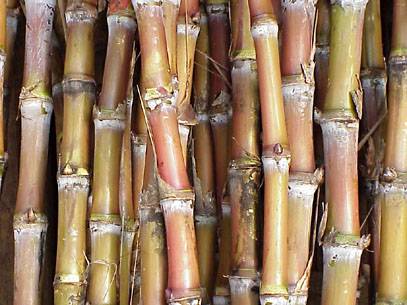
Because it can produce alcohol fuel from sugarcane, without subsidies, for prices competitive with petrol, Brazil has been dubbed “the Saudi-Arabia of ethanol.”

David Fuller, the London-based analyst, says: “No country is better positioned to benefit from the agricultural boom than Brazil, with its large and fertile land mass, absence of any desertification, and ample supply of fresh water.”

Other commentators point to the nation’s economic growth rate (around 5 per cent a year), a foreign trade surplus (running at about $40 billion a year), large foreign reserves, a strong currency and a buoyant stock market.

Last year Brazil attracted FDI (foreign direct investment in factories and business operations) of $37 billion, or twice as much as India. It was the world’s third biggest raiser of investment capital via equity issues after the US and China. And its international bonds are expected to be granted investment-grade status within two years.

Brazil has a flourishing middle class of 20 million – depending how you define “middle class,” five times larger than India’s – as well as political stability, a favourable environment for foreign investment, and strong job creation (5 million new jobs since 2000).

Years of favourable international environment, combined with good policies such as more disciplined public finances and trade liberalization, have delivered low inflation and falling interest rates. One result is the emergence from poverty of a new lower-middle class, so the nation’s notorious income inequality has been declining.

Sensitive to foreign capital flows

What are the negatives?

The public sector is bloated and corrupt, packed with time-servers with jobs for life and fat pensions to look forward to. Taxes to pay for it gobble up more than a third of national output – a proportion much higher than in other emerging markets and out of proportion to the low quality of services provided.

As is commonplace in countries where planning, building and operating infrastructure is almost entirely in the hands of bureaucrats, Brazil has some serious infrastructural problems, including power-supply shortages. The regulatory environment is not sufficiently clear to attract private investment.

Labour laws are highly restrictive, with welfare and other compulsory contributions adding 60 to 100 per cent to employers’ payrolls.

The stockmarket is very sensitive to flows of foreign capital, therefore exposed to adverse money shifts that may be triggered by developments unconnected with conditions in Brazil itself, such as the US sub-prime crisis.

Finally, remember that although Goldman Sachs’ BRIC study projected good per capita growth rates for the Brazilian economy over the coming decades, it suggested the three other nations in the group would grow even faster.

If you are interested in adding Brazil to your international portfolio to provide balance, the best way to do so is probably via one of the exchange traded funds listed in London or New York. There is an iShares MSCI Brazil Fund in London which I would favour as it is priced in Sterling and not Dollars or there  is the Brazil Fund (BZF) that trades in new York if you are looking for a dollar denominated fund.

IBZL

               Best wishes


Alan

Sunday, 6 April 2008

Investing in Emerging Markets-From Russia with Love ?

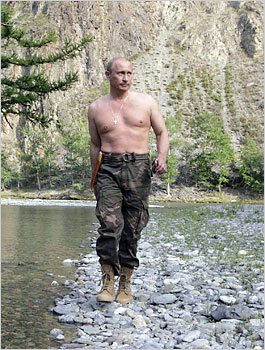
Vladimir Putin has taken leave of office and is being "replaced" by Dmitry Medvedev.Despite what some may think in the West ,Putin is extremely popular in Russia.During his premiership Russia has had a remarkable economic transformation . Since the early nineties the Russian Economy has been growing at a remarkable rate of 8% per annum.

image

Most of this growth has been down to the massive reserves of Natural resources that it can draw on particularly Oil, Gas and Precious Metals.The demand for these Natural resources from the emerging countries such as China and India has fuelled a boom that has seen a thriving middle class developing in Russia.

Like all middle classes these Russians are splashing out on cars, holidays and electronic goods. There is no doubt that some people may have concerns about investing in Russia, we can all remember when the Russian government was seizing power of Yukos and we were hearing stories of the "Red Mafia" running wild.However those who have invested in Russia in the past few years have seen some serious returns.

Russia is amongst the cheapest of the emerging market economies, it has huge resources of natural commodities that the world is crying out for and importantly at the moment has little or no exposure to the credit crisis that is impacting on a number of the rest of the worlds major economies. Some people may not like Vladimir Putin but you cannot fault what he has achieved in the economy.


The Case for Investing

The case for investing in Russia is based mainly on energy.It has vast oil reserves in its Western States and a third of the Worlds gas reserves sit in Siberia, this makes Russia  by far the worlds biggest gas exporter and producer. On top of this its neighbours have an increasing reliance on buying from Russia. Over 20% of the EU's natural gas comes from Russia.

image

The current record prices for oil means that the Kremlin is generating a fortune  in taxes that it has levied on the oil producers. It is estimated that Russia takes in over 80% of every dollar that the price of oil increases at the current levels.Learning from the past where they squandered the wealth that these Natural Resources generated Russia has created its own Sovereign Wealth Fund which is known as the Stabilisation Fund.The current estimates are that this fund has something in the region of $150bn.Russia also must be the  envy of many economists and politicians in the west in that it is estimated to have a budget surplus of 5-6% of GDP.


Downside Risks

As with all things where there is the potential of high reward there is attached risk, there is no doubt that there are risks associated with investing in Russia.State ownership has always meant that investment levels tend to lag behind what you would expect from private ownership.This is certainly the case in Russia, the limited investment in the Siberian Oil fields has seen an impact over the years in the levels of production growth.In the late 90's estimates were that production growth was around 10% per annum, the estimates now are that this has dropped to around 1%.

The picture with gas however is more rosy the Kremlin has been very active encouraging     ( some would say bullying) big Gas companies such as BP into investing in infrastructure in Central Asia.Putin has also got agreement from countries in the Caspian Region which allow Russia to get access to the reserves in the area for a fraction of what they are worth to the West so when selling these on to countries in the EU Russia is guaranteed a tidy mark-up.

One of the other potential downsides for to consider for the future  is infrastructure, since the collapse of the Soviet Union there has been  a major decline in the maintenance of Russia infrastructure, transport networks are very underdeveloped and this will have an impact on its competitiveness if plans are not soon put in place to invest in the road and rail network aimages well as the oil and gas pipelines.

The Russian government has recognised this and plans to throw around $1trn at the problem. The Kremlin has committed around $200bn with the rest coming from the private sector.


What to Buy ?

In my next post I will look at some of the ways and companies that could do well on the back of the continued boom in Russia .


Best Wishes


Alan


Monday, 29 January 2007

Water Water everywhere..............or is there ? How to invest in Water or Blue Gold

Some of you may have heard of T. Boone Pickens, for those of you that have not he is one of the worlds most famous Oil and Gas Billionaires. He founded a company called Mesa Petroleum with $2,500 and turned it into a billion-dollar company.So with oil reportedly running out and prices still way higher than they have been for years( we are currently thinking oil has become incredibly cheap at $50 a barrel-it was only in Oct 2004 that oil hit $50 for the first time and that was a record high!!!) then you would think that this 78 yr old billionaire would be very happy to sit back and enjoy the wealth brought on by one of the worlds most important Natural resources getting more and more scarce.It may surprise you then to know that he has been very busy buying up as many rights as he can to an even scarcer resource that we all tend to take for granted.........WATER.


He has set up a new company.Mesa Water and is investing heavily in water rights in Texas, he plans to pump the water to other areas in Texas such as San Antonio, Dallas-Fort Worth to name but a few.........for a price of course.


What this tells us is that the BIGGEST natural resource issue we will face in the coming years is access to fresh water.Our planet is awash with water, unfortunately a lot of it is salt water and with the increasing industrialization taking place in countries like India and China, the water resources they have(which were already fairly scarce) are becoming polluted and unusable not only for drinking but for use on crops and farmland.


This means that companies who own large amounts of water or those who are involved in desalination or water infrastructure could do very well in the years to come.Currently we are starting to see water and water related stocks hitting the mainstream press but I think we are still likely to be in ahead of the crowd if we move quickly.


I have had a holding in VEOLIA ENVIRONNEMENT -ADR, (VE) which provides environmental services to municipalities and corporations worldwide. for the past 6 months or so and in that time it has risen 32% or 60% annualised.I think in the mid term there is still plenty of upside for VE as it is I believe extremely undervalued given its prospects.


Another possibility is PICO HOLDINGS INC, (PICO) operates in five industry segments: property and casualty insurance; surface, water, geothermal and mineral rights; medical malpractice liability insurance; portfolio investing; and other.


PICO is slightly more diversified but nonetheless is well positioned to take advantage of the worlds increasing need for water.


As ever do your research, these stocks should not be too volatile so I would be comfortable placing a 15-20% stop loss on any purchase and be prepared to hold them for a few years.


Best Wishes


Alan


Tags: , , , , , ,


Powered by Qumana