How to make Money in the Stock Market.This blog looks at how you can make money trading and investing in Forex, Stocks Options and Futures.

Google
Showing posts with label Brazil. Show all posts

Friday, 9 May 2008

The growing Food Crisis -what should I invest in

Around the world, rising food prices have made basic staples like rice and corn unaffordable for many people, pushing the worlds poor in places such as Africa and Asia to breaking point. It is incredible listening to the news these days to hear the headlines about Global Food Shortages and riots in countries like Haiti  and Mexico. We have become so used to the availability of food in our stores that it is sometimes easy to forget that for some people it is not just a case of heading to the nearest store to get food for their table.For some it is a matter of life and death to be able to get staple items such as wheat and rice.

It has become such a problem that some of the worlds governments have had to step in to try to protect the stock that they hold.Just yesterday India placed a ban on futures trading in several commodities, including soybean oil, chickpeas and potatoes.This was an attempt to preserve supplies and keep down the rampant inflation that is being caused by the increase in food prices.

800px-Tranplant-rice-tahilandIn Asia the problem is just as acute with rice continuing to make new highs on world exchanges.The demand placed on the prices of rice due to the huge populations of China and India has seen it reach astronomical levels with the price more than doubling in the last year.

As well as the impact on populations desperate to feed themselves, we are seeing the impact on countries as farmers try to capitalise on the current high prices by seeking land wherever they can to grow the crops that are being demanded across the globe.

Until the end of the last century, soybeans were practically unknown in the Amazon basin. It was not until the grain terminal was built that soybean farmers came to the region from farther south. The land there was cheaper, the banks were offering low-interest loans and sales were guaranteed.

Villages, rubber plantations and grazing land for cattle were transformed into bean fields. The farmers cut enormous swathes into the rainforest, until environmentalists put a temporary stop to the unchecked rash of clearcutting. In Mato Grosso, the most important farming region, producers and environmental activists agreed on a two-year moratorium on the purchase of soybeans from the Amazon basin.

From the Río de la Plata to the Amazon, the Chinese are sucking the markets for soybeans dry. Large segments of the state of Mato Grosso are already covered with a green, pesticide-drenched monoculture. In the dry season between August and November, a cloud of smoke descends on Cuiabá, the capital of Mato Grosso. Despite a government ban, many farmers burn down sections of the rainforest to gain more farmland.

In Brazil we see huge swathes of land being used to grow Soybeans to satisfy the demand from ChinaBrazil Soybeans .Brazil is one of China's major trading partners. Long-term contracts between the two countries are intended to secure raw materials for China -- and, more recently, food products in particular.

This rising world power, with its population of 1.3 billion, must take steps to ensure that it too does not become a victim of the Food Crisis .However it has a competitor on the horizon.India home to 1.1 billion people, has caught up with China in terms of the power it wields as a massive market. Together, the two Asian nations must feed more than a third of the world's population. In times of exploding food prices, their sheer size alone makes the crisis even worse.

It isn't difficult to imagine what happens to prices when the world's two most populous countries buy up other food products in a similarly aggressive fashion. In more and more dangerously poor countries, wheat and meat have become an almost unaffordable luxury, while famine and hunger riots are only likely to get worse.

Over the next few years I can only see these challenges becoming worse and prices continuing to rise.

In order to invest in these commodities we need to look once again at our favoured ETFs, I have a position in DBA the Powershares Agriculture Fund.You could also look at the AIGG Grains ETF (AIGC) or the individual ETFS for Soybeans (SOYB) or Wheat (WEAT).

There is likely to be volatility in  these markets so I would not bethinking short term and I will place stop losses of around 20% on any positions that I have or buy in to. Over a 3-5 year period I think these holdings will do very well.


Best Wishes


Alan


Friday, 25 April 2008

Brazil's Booming Economy Drawing More Investors - Markets * US * News * Story - CNBC.com


Interestingly after my post earlier this week (Investing in Brazil) this appeared on CNBC yesterday-just goes to show reading this blog keeps you ahead of the Crowd :-)


Brazil's Booming Economy Drawing More Investors - Markets * US * News * Story - CNBC.com


It further reinforces my view that Brazil is a worthwhile longer term opportunity to consider for your portfolio.


Best Wishes


Alan


Technorati Tags:

Wednesday, 23 April 2008

Investing in Emerging Markets using ETF's


Continuing on my recent themes of investing in emerging Markets, it may be worth looking at the Deutsche Bank x-trackers these will give you exposure to numerous emerging markets including India, Vietnam, Korea, Taiwan, Brazil and Russia.

You can find details at www.dbxtrackers.com


Best Wishes


Alan

Tuesday, 22 April 2008

Investing in Brazil

Brazil_-_Rio_de_Janeiro

A few Years ago Morgan Stanley came up with the original idea that four big countries – Brazil, Russia, India and China – would together soon become so important in the world economy that they could be viewed as a single group, much as we think of Europe or Latin America.

They dubbed the group BRIC, after the first letters of their names, saying that their combined economies, from being just 15 per cent the size of the world’s six most advanced countries’ – including the US and Japan -- would grow to become even larger than them in combination in fewer than 40 years.

There has been a lot of focus on India and China and I have written about these countries in past articles Broken China ??   &  Investing in India The challenge with both these countries is that they do seem to still be linked to the fortunes of Wall Street and have suffered along with the US Markets

Brazil and Russia, by contrast, are among the handful of countries best situated to supply those increasingly valuable natural resources and so are fairing a lot better and seem less exposed to the US story and more exposed to the Commodities and Energy story that is doing well in the face of the US recession.

Russia is a huge exporter of oil and natural gas, nickel and platinum group metals. Brazil is the world’s biggest supplier of internationally-traded agricultural products such as sugar, soybeans, coffee, corn, orange juice, beef and poultry.

                                          Cooldown

Both still have enormous resources that can be developed to meet Asia’s growing demands.


No shortages of energy, food or water

Last year Brazil’s main stockmarket index rose 71 per cent in US dollar terms, or even faster than India’s, suggesting that international investors are awakening to the potential of the South American giant.

Much of that interest was focused on Brazil’s two biggest stocks – Vale (NYSE:RIO) and Petrobras (NYSE:PZE). Vale is the world’s biggest exporter of iron ore; Petrobras has just made the world’s second-largest oil/gas discovery in 20 years, deep beneath Atlantic waters.

But it’s renewable resources, rather than minerals, that are increasingly attracting investor interest.

The well-known British investor, Jim Slater, says Brazil is “insulated against the world’s main shortages – fresh water, agricultural commodities and energy.”

It contains nearly a fifth of the world’s fresh water, available to expand agricultural production and carbon-free electricity generation. Hydro-power already provides 80 per cent of Brazil’s electricity needs, and two big new dams are being built on the Amazon at a cost of $10 billion.

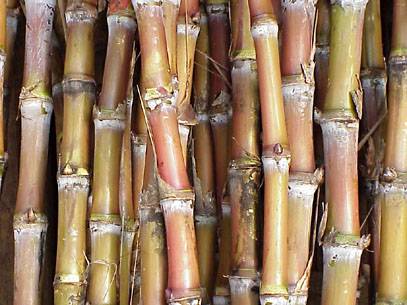
Because it can produce alcohol fuel from sugarcane, without subsidies, for prices competitive with petrol, Brazil has been dubbed “the Saudi-Arabia of ethanol.”

David Fuller, the London-based analyst, says: “No country is better positioned to benefit from the agricultural boom than Brazil, with its large and fertile land mass, absence of any desertification, and ample supply of fresh water.”

Other commentators point to the nation’s economic growth rate (around 5 per cent a year), a foreign trade surplus (running at about $40 billion a year), large foreign reserves, a strong currency and a buoyant stock market.

Last year Brazil attracted FDI (foreign direct investment in factories and business operations) of $37 billion, or twice as much as India. It was the world’s third biggest raiser of investment capital via equity issues after the US and China. And its international bonds are expected to be granted investment-grade status within two years.

Brazil has a flourishing middle class of 20 million – depending how you define “middle class,” five times larger than India’s – as well as political stability, a favourable environment for foreign investment, and strong job creation (5 million new jobs since 2000).

Years of favourable international environment, combined with good policies such as more disciplined public finances and trade liberalization, have delivered low inflation and falling interest rates. One result is the emergence from poverty of a new lower-middle class, so the nation’s notorious income inequality has been declining.

Sensitive to foreign capital flows

What are the negatives?

The public sector is bloated and corrupt, packed with time-servers with jobs for life and fat pensions to look forward to. Taxes to pay for it gobble up more than a third of national output – a proportion much higher than in other emerging markets and out of proportion to the low quality of services provided.

As is commonplace in countries where planning, building and operating infrastructure is almost entirely in the hands of bureaucrats, Brazil has some serious infrastructural problems, including power-supply shortages. The regulatory environment is not sufficiently clear to attract private investment.

Labour laws are highly restrictive, with welfare and other compulsory contributions adding 60 to 100 per cent to employers’ payrolls.

The stockmarket is very sensitive to flows of foreign capital, therefore exposed to adverse money shifts that may be triggered by developments unconnected with conditions in Brazil itself, such as the US sub-prime crisis.

Finally, remember that although Goldman Sachs’ BRIC study projected good per capita growth rates for the Brazilian economy over the coming decades, it suggested the three other nations in the group would grow even faster.

If you are interested in adding Brazil to your international portfolio to provide balance, the best way to do so is probably via one of the exchange traded funds listed in London or New York. There is an iShares MSCI Brazil Fund in London which I would favour as it is priced in Sterling and not Dollars or there  is the Brazil Fund (BZF) that trades in new York if you are looking for a dollar denominated fund.

IBZL

               Best wishes


Alan

Thursday, 27 March 2008

Which Emerging Markets should I invest in ? and Market Close for 27th March

I am going to look at some of the emerging markets over the next few post specifically to understand the opportunities , the mid term outlook and some of the ways that you could invest in these markets should you feel that they are worth doing so.


I plan to look at three markets in the next few posts: Russia, Brazil and Africa, I will take a look at Russia either tomorrow or over the weekend .


Meantime the markets today sold off sharply in the last hour, this may be as a result of how much was borrowed at the FED Discount Window or a  some rumours that may have been circulating this afternoon.It could also have been triggered by those in the know “front running” the releases in the morning.

Interestingly enough there was another big drop on the back of major puts purchases in Lehman brothers, this may be just pure speculation or there may be someone in the know regarding some issues or problems at Lehman.


Currently the S&P index is tracking for the worst opening quarter since 2001, even with the usual window dressing that occurs at the end of a quarter, this could see the early days in April showing more declines as the quarter closes.

Tomorrow there is potential for more bad news with a number of economic reports coming out including Personal Income and Personal Spending data.


Look out for the Russia report in the next couple of days.


Best Wishes


Alan